Here’s something I’m working on just now. It’s a work in progress, so it’s not intended to be finished yet. I have the lines and base colors in, but that’s about it.
It’s the interior of a Montgomery, AL bus CIRCA 1955. It will be the background for an illustration of Claudette Colvin’s March 2, 1955 refusal to give up her seat to a white woman on a segregated bus.
I found quite a few pictures of buses of that period and I did my best to get it accurate.
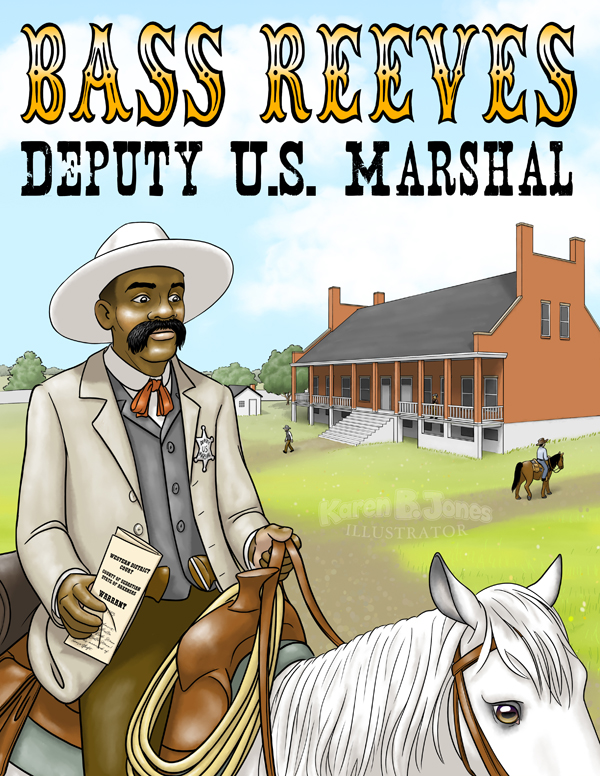
Here’s an illustration of Deputy US Marshal Bass Reeves riding out of Fort Smith, Arkansas with a warrant in hand. Bass Reeves was the first black Deputy US Marshal west of the Mississippi. He is thought to be the real-life inspiration for The Lone Ranger. He did not have an Indian sidekick named Tonto (which is offensive on a couple of levels) but he did have friends among the indigenous tribes living in the Oklahoma and Indian Territories. The story is that he fled to Oklahoma Territory after he learned about his emancipation from slavery after the Civil War. There he learned several native languages and how to shoot and track. Those skills and contacts, along with his own ingenuity, later helped him track down the outlaws he was charged with capturing as a Deputy US Marshal. Upon his retirement, he had over 3,000 arrests of felons on his record and had killed 14 outlaws, an impressive tally which inspired many stories.
I used some artistic license to give him a white horse, like The Lone Ranger, and the traditional white hat of the western hero. The Fort Smith courthouse is drawn how it looked sometime in the 1870s. I used several reference photos for both the courthouse and Bass Reeves himself.
The font I used on the bottom is named Nashville and designed by Disturbed Type. I like the eroded look to it. I hand drew the letters for his name using the font Tagwood by Intellecta Design as a guide.
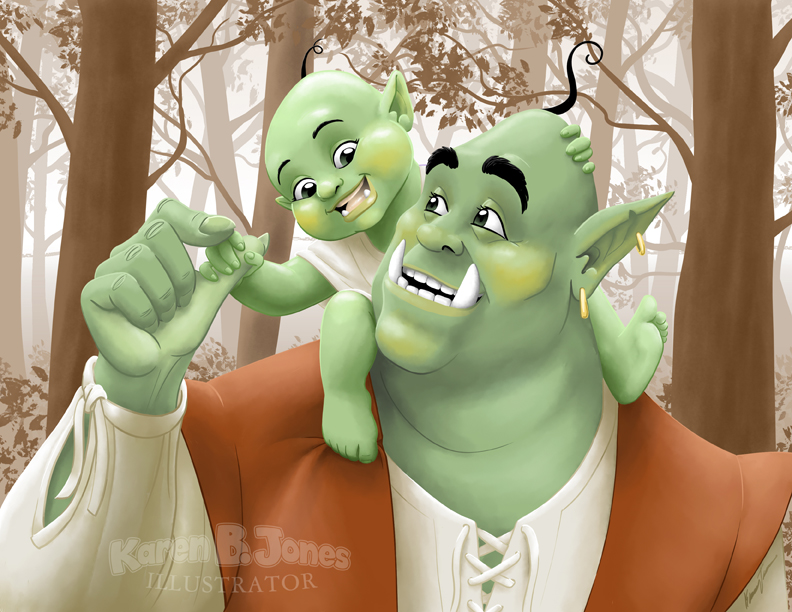
Here’s a personal piece I just finished. I’ve been playing Dungeons & Dragons with my family and I think it’s sad how orcs are depicted as just a bunch of mindlessly aggressive monsters. They have families, right? They must. So, here’s a candid portrait of an orc dad and his offspring.
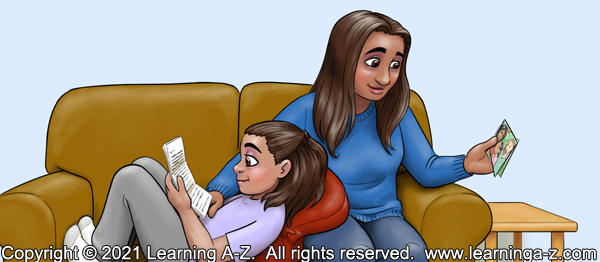
Page 14 doesn’t have an image, so we skip on to page 15 from The Neighborhood’s Night by Juliana Catherine. This is the last illustration and the end of the book.
It’s not a completely happy ending because, even though Leena’s back in her own home, Amaya’s family lost their house. This is supposed to be a “tough subjects” series, so a not entirely happy ending is appropriate. But it’s not all bad because Amaya has sent Leena a letter saying how they found a place to live and are doing okay. They even sent pictures.
I made sure it’s the same couch and wall as page 4 so it’s definitely the same house. It comes full circle.
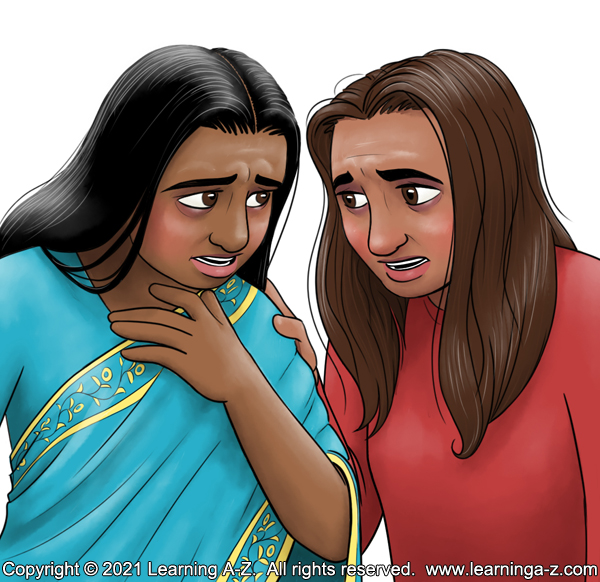
Here’s the 8th illustration for the book project I just finished for Learning A-Z. Page 10 of The Neighborhood’s Night by Juliana Catherine.
This is the only close-up portrait in the story. The two moms are leaning in close together discussing what’s happened. They’re both tired and very worried.
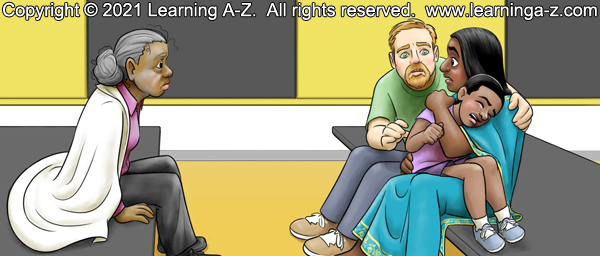
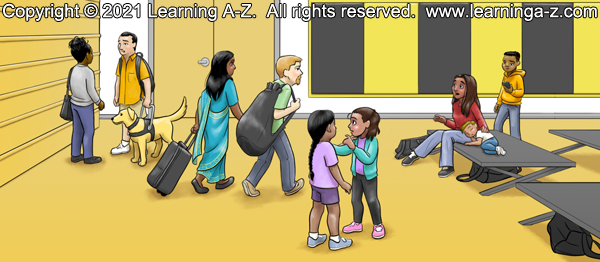
Here’s the 7th illustration for the book project I just finished for Learning A-Z. Page 9 of The Neighborhood’s Night by Juliana Catherine.
Here Leena’s family is getting settled a bit when a family they’re friends with shows up. The woman, Saanvi, is wearing a sari because I’ve seen Indian women in my neighborhood wear these, but I’ve never actually drawn one. So, when the client said they wanted me to make her Indian, I decided to go ahead and give her this traditional outfit while I was at it. It was fun to draw. I kept the decorative pattern really simple, though, because I didn’t want her clothes to have way more detail than the clothes of the other characters in the story so that it looked inconsistent. I do hope I drew it right.
It just occurred to me that I don’t think I drew anyone with glasses on in this story. I should have done that. Oh well. Mental note to self to put some glasses in the drawings for my next project, if possible.





 Karen B. Jones - Illustrator